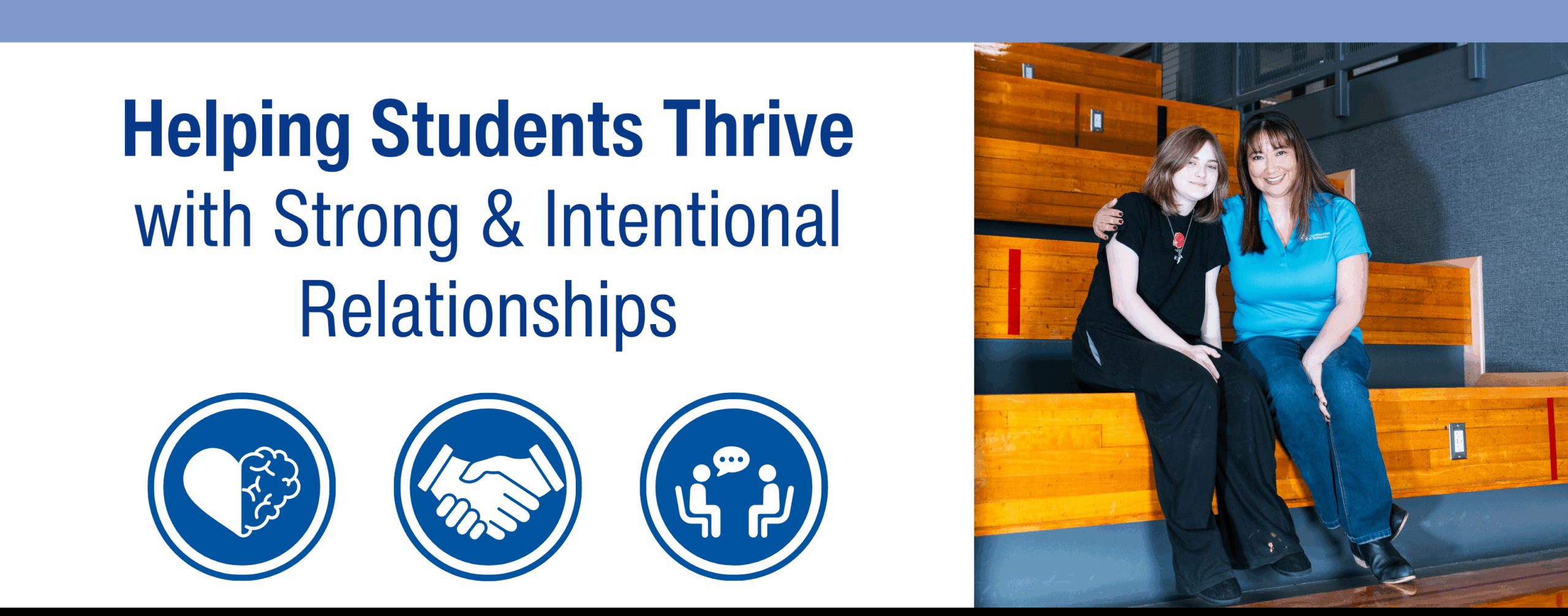
How can we show up even more intentionally in the lives of young people? At its heart, Developmental Relationship Training is about answering one important question: by providing staff with the tools and frameworks to build stronger connections, Communities In Schools of Washington is deepening its training efforts. Led by Program & Impact Director Nikki Ziegler, the training recently engaged affiliate staff from Communities In Schools of Greater King County.
Research developed by Search Institute, this training introduces a research-backed framework that helps staff build even more intentional, impactful relationships with young people. And while relationship-building is already a core reason staff join the CIS network, DRT gives them something powerful, a shared language, a clear structure, and tools to deepen what they do so naturally.
“Being in this position for a while, eventually, things become routine. This helped me reset a bit to be more intentional about the actions I’m already taking to support students.”
Why This Training Matters
The Search Institute framework breaks that answer into five research-backed principles that help youth thrive:
- Express care: Showing students they matter and listening with empathy.
- Challenge growth: Encouraging them to stretch, set goals, and try new things.
- Provide support: Helping them navigate obstacles with guidance and structure.
- Share power: Giving students voice, choice, and opportunities to lead.
- Expand possibilities: Opening doors to new experiences, networks, and opportunities.
Though these concepts may seem intuitive, staff shared that the training provided a powerful shift. Before, they relied heavily on instinct. After the training, they could more clearly identify their strengths, understand their “blind spots,” and choose which principles to emphasize in their daily work intentionally.
“I will work on expanding possibilities with my youth to ensure they can start thinking and seeing their full potential.”
Interactive, Reflective, and Rooted in Youth Voice
Unlike a typical sit-and-listen training, the DRT sessions are highly interactive: full of storytelling, practice scenarios, and reflection. Staff spent time looking inward: Which principles come naturally? Which ones require more intentionality? What does each principle look like in their school buildings, with students?
The training also draws heavily from Search Institute’s research, which blends data with the lived experiences of youth. This grounding ensures that the concepts aren’t just theoretical, but also that they’re aligned with what young people actually say they need from adults in their lives.
One participant shared:
“Listen to my students and make them advocate for themselves more. I will find more community relationships to support my students better and keep working with school staff to provide a great and safe environment.”
Why CISWA Is Invested in This Work
This first training (attended by roughly 17 staff from Greater King County) is just the beginning. CISWA plans to host three more trainings before the end of 2026, with no cap on participation and the potential to expand regionally as larger spaces become available.
For Nikki, this work reflects CISWA’s long-term commitment to equipping our staff with the tools and frameworks that support strong relationships with students. While this was the first time this cohort experienced the curriculum in a classroom-style setting, Nikki’s recent certification in the Developmental Relationships framework, completed with CIS peers from our national network, enables CISWA to offer this training to affiliates across the state.
Momentum is already building. Program managers at GKC were strong champions in bringing this to their teams, and early feedback shows staff are eager for more opportunities to use the framework, internally with students, and even with school staff.
Looking ahead, one opportunity stands out: extending this shared language to school partners. Since so much of student success depends on collaboration within schools, having a common relationship framework could be transformational.
How This Benefits Partners and Sponsors
At CISWA, relationships are the core of our model. Yet until now, we haven’t had a dedicated, research-backed training specific to building relationships with youth. Developmental Relationship Training fills that gap, and elevates it.
For partners and sponsors who care deeply about youth outcomes, this training represents:
- A proven, evidence-based approach to strengthening student support
- A way to align school staff, CIS teams, and community partners around shared practices
- A scalable model that reinforces the relational foundation of our work
- A framework grounded in what young people say they need to thrive
DRT blends research, youth voice, and hands-on practice, making it a compelling investment for anyone committed to helping students feel seen, supported, and motivated.
This first session at CIS of Greater King County set a strong foundation. Staff walked away energized, reflective, and ready to apply the principles intentionally, not just instinctively. And with more trainings planned, CISWA is excited to expand this work across the network.
As Nikki shared, the real power of DRT isn’t just understanding the five principles; it’s using them daily in hallways, one-on-ones, family meetings, and conversations with school staff. It’s the difference between being supportive and being strategically supportive.
And ultimately, it means more young people in Washington will experience relationships that help them feel cared for, challenged, supported, empowered, and inspired.