One year can hold a lot.
For Dr. Gwynth R. Nelson, her first year as State Executive Director of Communities In Schools of Washington has included a cross-country move, visits to schools and communities across Washington, new relationships with students and CIS teams, a growing Board of Directors, expanding advocacy work, and countless opportunities to see firsthand what it means to surround students with a community of support.
It has also brought her to an important moment in the organization’s history.
This year, Communities In Schools of Washington is celebrating its 35th anniversary, marking three and a half decades since Washington leaders came together in 1991 around the belief that students thrive when schools and communities work together to meet their needs.
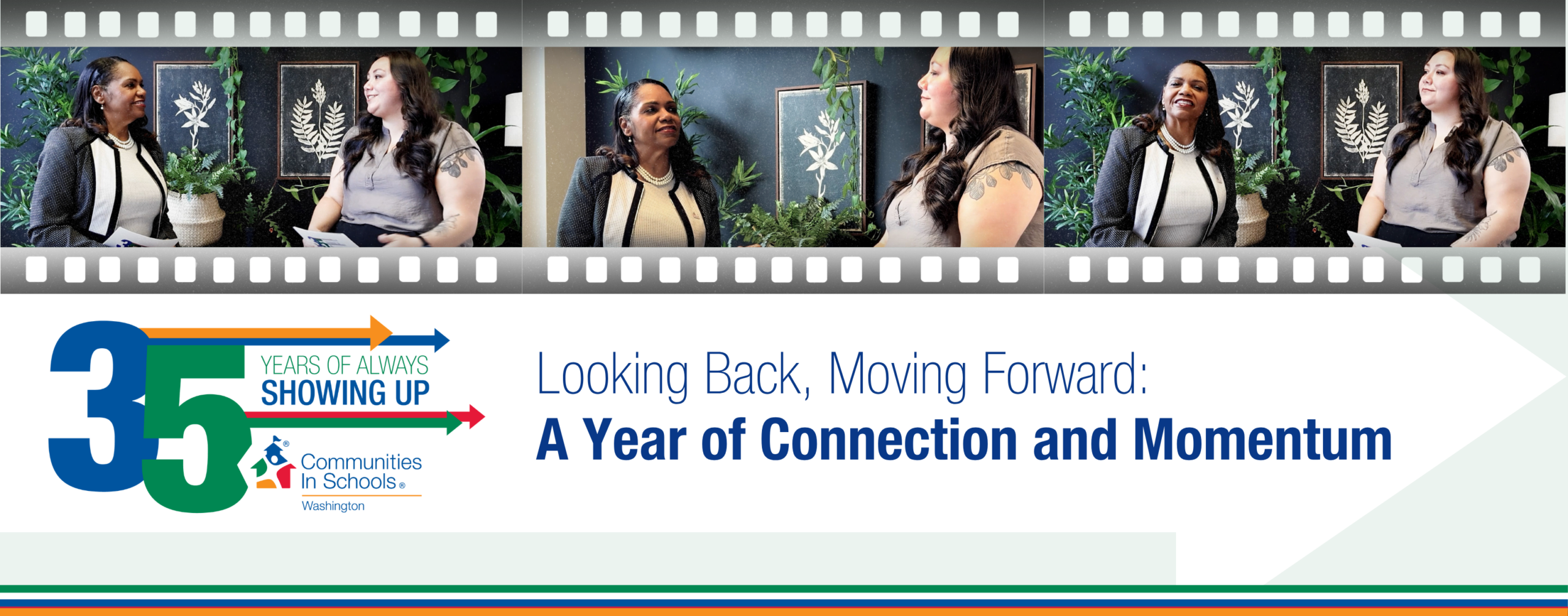
In a recent conversation with CISWA Deputy Director Erica Limón-Trefielo, Gwynth reflected on the moments that have stayed with her during her first year, what she has learned from the statewide network, and what she hopes the CISWA community will help make possible in the years ahead.
Finding Connection in Unexpected Places
When Gwynth is asked about the highlights of her first year, she does not begin with an organizational milestone, a meeting, or a strategic plan. She begins with a student.
During a visit to a school in a rural Washington community, Gwynth met a young man who had been experiencing attendance challenges. At first, he was reserved. Then… he noticed what she was wearing.
He was interested in fashion and knew details about her outfit that Gwynth herself did not know. That observation opened a conversation. Gwynth told him about her sons, who had started their own fashion business in Georgia, and the student asked whether there might be an opportunity to speak with them.
Working with the school’s CIS Site Coordinator, they made the connection happen. Soon, three students were on the phone with Gwynth’s two sons, talking about fashion, entrepreneurship, interests, and possibilities.
The student who had initially been reluctant to open up began talking about his dreams.
For Gwynth, the moment captured something essential about the Communities In Schools model: showing up for a student begins with seeing who they are.
“It brings me a level of joy that I have not experienced before,” she remarked.
Gwynth spent much of her career in higher education before joining CISWA. Her first year has given her the opportunity to connect with students much earlier in their journeys and to consider how support during the K–12 years can influence what becomes possible later.
Seeing What “Showing Up” Looks Like
Another moment Gwynth carries with her came from another rural school, where she joined a CIS Site Coordinator for a monthly birthday celebration for younger students.
The children, some only five or six years old, gathered for cupcakes, small gifts, and the opportunity to simply celebrate together.
Gwynth sat with them in the small classroom chairs, listening as they shared stories and talked excitedly about their families. One child immediately began thinking about what they could bring home to share with a younger sibling. This visit served as a reminder that belonging is often built through moments that might be easy to overlook.
In this same visit Gwynth also learned about food boxes the Site Coordinator delivered directly to families in the surrounding community. In some cases, that food helps ensure families had enough to eat through the weekend.
As Erica observed during their conversation, in some rural communities CIS is not simply connecting families to an existing food pantry or service provider. The Site Coordinator may have to help build the system itself because the resource does not otherwise exist nearby.
The ability to respond to the realities of each student, school, and community is central to the CIS model. And this support can look different from one student to another.
For one young person, it might be a connection to a mentor who shares their passion for fashion. For another, it is a birthday celebration that makes them feel remembered. For a family, it may be a box of food delivered before the weekend. It’s all about helping to provide what students need to thrive.
Learning from a Statewide Community
Gwynth’s first year has taken her beyond individual student moments and into communities throughout Washington, where she has met Site Coordinators, affiliate leaders, school administrators, superintendents, donors, partners, Board members, and supporters.
When Erica asked what she was most proud of after a year in the role, Gwynth returned again to community.
She spoke about the collective effort required to make this work possible and the people who contribute at every level, from the adults working with students every day to the organizations and individuals investing resources behind the scenes.
She also reflected on her own transition.
Joining CISWA meant moving across the country and adapting to a new state, region, organizational culture, and community. Gwynth credited the CISWA staff with helping make that transition possible.
Erica, who has now worked alongside her for a year, described watching Gwynth build relationships with humility and authenticity: entering spaces ready to listen, learn, and understand before acting.
Those relationships have extended to CISWA’s Board of Directors, which has grown significantly and brought new champions into the organization at a pivotal moment.
That matters because Gwynth has a clear ambition for the years ahead.
I don’t want Communities In Schools of Washington to be the best kept secret anymore.”
Gwynth wants more people to understand not only who CISWA is, but what is happening every day inside schools and communities across the network.
The Heartbeat of Communities In Schools
Throughout the conversation, Gwynth and Erica repeatedly returned to the people closest to the work: Site Coordinators. They are the heartbeat of the organization.
Site coordinators are the adults inside schools who build relationships with students, identify barriers, connect families to resources, coordinate community partners, and remain present through challenges that rarely have quick or simple solutions.
Their work also reflects the larger network behind them.
CISWA’s statewide impact depends on the leadership and resilience of local affiliates, the partnerships they build in their own communities, and their ability to adapt the CIS model to what students and families actually need.
That adaptability becomes especially important during periods of uncertainty.
During the conversation, Erica reflected on the difficult funding environment facing schools, nonprofits, and communities across Washington. As policymakers confront competing priorities and limited resources, organizations serving students and families are working to preserve critical supports while continuing to respond to growing needs.
Funding decisions can affect the ability to provide food, connect families with housing resources, support student mental health, reduce barriers to attendance, and maintain the trusted adults who help students navigate challenges.
At the same time, Erica sees growing momentum around CISWA’s advocacy work. Policymakers are increasingly reaching out, asking for CISWA’s perspective and recognizing the organization as a resource when considering issues affecting students and families.
This work will take another step forward in February 2027, when CISWA plans to hold its first Youth Advocacy Day, creating an opportunity to more directly integrate young people and families into the conversations shaping priorities that affect them. For Erica, this is an important direction for the organization: not simply advocating for young people, but creating more opportunities for their experiences and voices to help inform the work.
35 Years of Showing Up
Gwynth’s first anniversary as State Executive Director arrives alongside Communities In Schools of Washington celebrating 35 years of showing up.
CIScame to Washington in 1991, inspired by the belief that young people succeed when caring adults and community resources are brought into schools where students already spend their days.
Over the decades that followed, the idea grew into a statewide network serving communities across Washington. This anniversary is an opportunity to celebrate this history and recognize the thousands of people who have made that history possible and to bring more people into the work ahead.
The anniversary celebration will continue throughout the coming year, leading toward a major 35th Anniversary Gala in Spring 2027.
Gwynth is already looking forward to bringing together the many people who have shaped CISWA’s story, from current leaders and longtime supporters to alumni, community partners, members of the statewide network, and people connected to Communities In Schools from the beginning.
But Gwynth emphasized that participating in the anniversary does not require attending the event. Small actions also matter.
A monthly contribution can help strengthen support for students. Sharing a CIS story can help another person understand the impact of the work. Volunteering inside a school can create a connection. Introducing someone new to CISWA can expand the community standing behind students.
There are several ways to be part of the 35th anniversary:
- Share your story through “What’s Your 1991?”
- Join the 35.35 Giving Circle
- Subscribe to CISWA communications to follow the celebration
- Share the work of Communities In Schools with someone who may not know the organization yet
Every action strengthens the circle of support around Washington students.
Looking Toward the Next 35 Years
When Gwynth looks ahead, she sees momentum across the entire CISWA network: a growing Board of dedicated champions, a committed State Office team, resilient affiliate leaders and staff, and Site Coordinators who build trusted relationships with students and families every day.
She is equally focused on sustainable growth, strengthening the network in ways that allow communities to rely on CIS for years to come. That work will continue amid real challenges, but Gwynth and Erica see a network with 35 years of experience adapting, responding, and finding ways to meet students and families where they are.
Gwynth’s first year has reinforced the importance of staying close to the people and communities CISWA serves. That has meant visiting schools, sitting alongside young students during a birthday celebration, hearing a teenager talk excitedly about a future in fashion, learning how food boxes support families through the weekend, and building relationships with the Site Coordinators and local leaders who make this work possible.
Those experiences offer a powerful reminder that meaningful change often begins with a moment of connection. A conversation, a resource, an introduction, or the presence of a caring adult can expand what a young person sees as possible for their future.
Thirty-five years after Communities In Schools of Washington began, that commitment continues to guide the organization forward. As Gwynth enters her second year of leadership, she hopes more people across Washington will learn about the work, share their own CIS stories, and become part of the community supporting students.
The next chapter of CISWA will be shaped by the people who choose to invest their time, voices, resources, and relationships in Washington’s young people.